HOME · WHAT IS HOOKAH? WHAT'S A HOOKAH — DEFINITION, MEANING, HISTORY, MODERN FORMAT REVIEWED 2026-05-18
PILLAR · HOOKAH 101

What Is Hookah? What's a Hookah — Definition, Meaning, History, Modern Format

O
Reviewed by Olit Hookalit Editorial Team · Authorized US Distributor — West Sacramento, CA
WRITTEN 2026-04-22 · UPDATED 2026-05-18
SNAPSHOT
16th c.
ORIGIN PERIOD
4
CORE COMPONENTS
60 min
AVG SESSION
200K
MEGA 200K PUFFS
TL;DR — tap to expand
SPEAKABLE

Hookah is a water-pipe smoking device originally from 16th-century Persia and India. A traditional hookah burns flavored shisha tobacco over charcoal; the smoke passes through a water base before reaching the hose. Modern electric hookah replaces the charcoal-and-tobacco source with a battery-and-juice source — same base, same hose, same group ritual — without the charcoal management or carbon monoxide spike. The Olit Hookalit Mega 200K is one of the cleanest examples in the disposable-head subcategory.

What's a hookah — in plain English

What's a hookah? A hookah is a water-pipe device that lets one or more people share a single flavored-smoke or flavored-vapor source through hoses. You light a heat source (traditionally charcoal, more recently a battery and mesh coil), the heat vaporizes flavored tobacco or e-liquid, the vapor passes down through a water base where it cools and bubbles, and the user inhales the cool flavored vapor through a hose. The whole session typically lasts 30–90 minutes and is meant to be shared.

The simplest hookah meaning is: water-pipe + flavored heat source + shared hoses. Everything else — glass base size, hose length, charcoal type, electric-vs-charcoal — is variation on the same core. Hookah definition in legal and regulatory documents typically reads as 'a smoking device with a water reservoir through which smoke or vapor is drawn before inhalation' — that's the same thing in formal language.

Common search variants of "what is hookah" — what's a hookah, whats a hookah, hookah meaning, hookah definition, what does hookah mean, what is a hookah pipe, what's hookah — all point at the same device. Regional names like shisha, narghile, argileh, and qalyan describe the same physical hardware in different cultural contexts (more in the next section).
SHOP THE LINEUP · 3 SKUS

Shop the Olit Hookalit lineup — pick your device

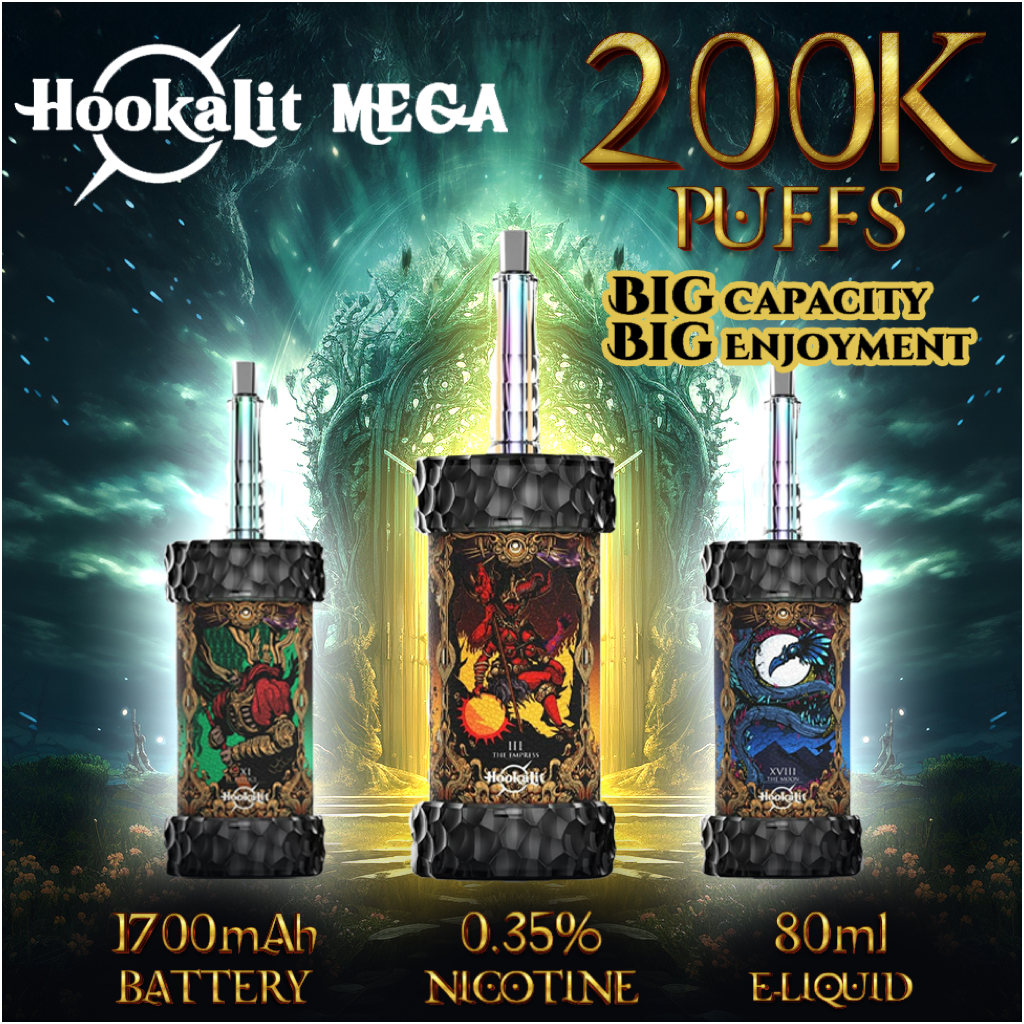
Olit Hookalit Mega 200K — Two Apple IN STOCK
MEGA 200K
Two Apple
$33.99 $59.99
200K puffs0.35% nicBase mountSession-tuned
Shop Mega 200K →
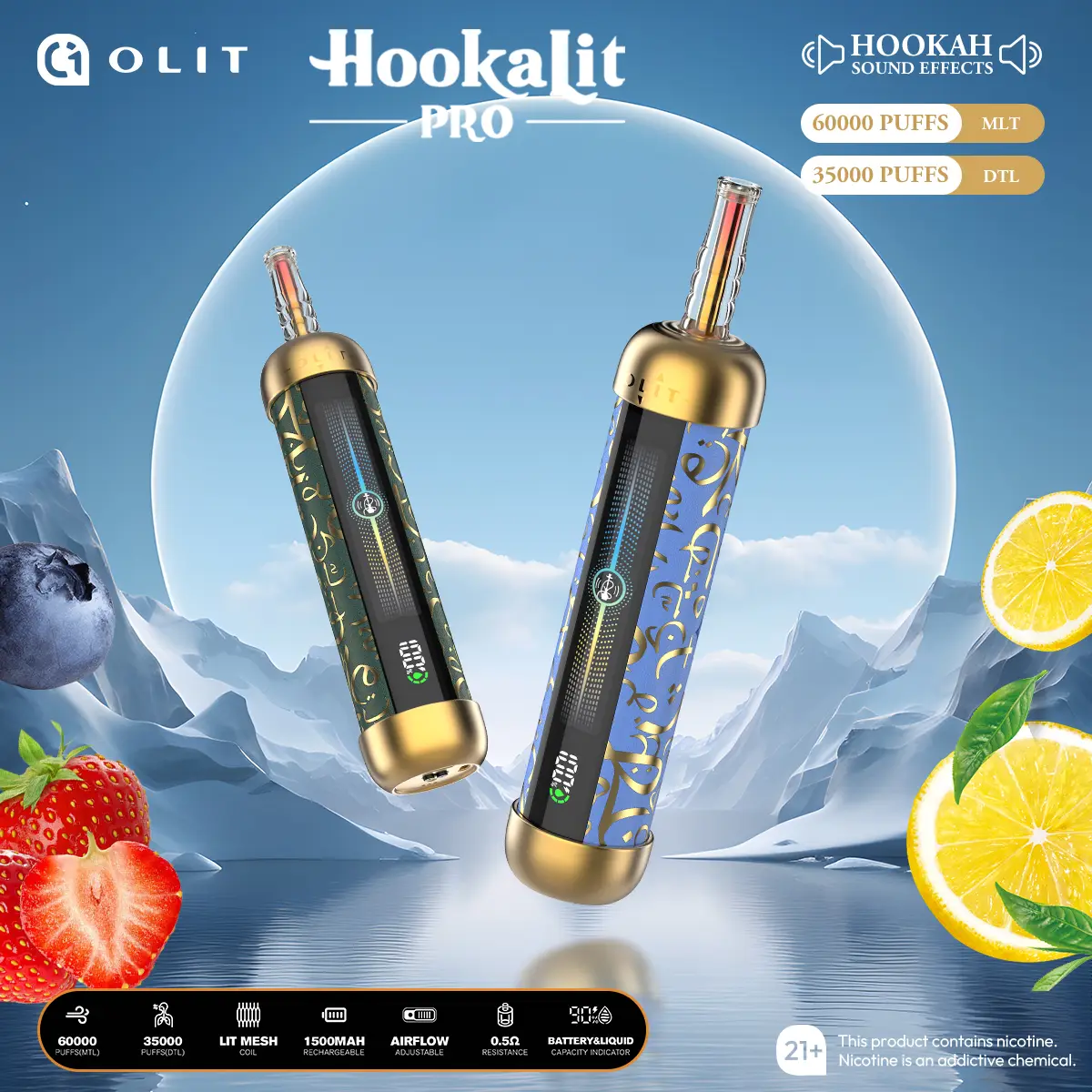
Olit Hookalit Pro 60K — Two Apple IN STOCK
PRO 60K
Two Apple
$20.99 $32.99
60K puffs0.35% nicUSB-CPocket MTL
Shop Pro 60K →
Olit Hookalit 40K Tarot Edition — Two Apple Shisha IN STOCK
40K TAROT · THE HIEROPHANT
Two Apple Shisha
$18.99 $29.99
40K puffs0.35% nicTarot artHookah-traditional
Shop 40K Tarot →

Three devices, one hookah-traditional flavor system — Mega 200K mounts on a shisha base for full sessions, Pro 60K is the pocket workhorse, 40K Tarot is the no-base entry. Cards open on Two Apple; switch flavor on the product page.

Hookah — short definition

A hookah is a multi-stem water-pipe smoking device. The user inhales through a hose; the inhaled air is pulled across a heat source (traditionally charcoal sitting above a tobacco bowl), down through a stem, through a water base where it bubbles and cools, and then into the hose. The result is cooler, water-filtered smoke compared to a direct-light pipe.

Other names for hookah depending on the regional tradition: shisha (the term is shared with the flavored tobacco itself in many places), narghile or narguile in the Levant and Brazil, argileh in parts of the Arabic-speaking world, qalyan in Iran. The device is functionally similar across these names; the cultural ritual around it differs.

Brief history — 16th century to now

Hookah originated in the 16th century in the territory of present-day India and Persia. The early version was a coconut-shell base used by physicians as a smoke-cooling device for a tobacco-and-water mixture. Over the following 200 years the design refined into the multi-component glass-base, brass-stem, ceramic-bowl shape recognizable today. By the 18th and 19th centuries the hookah was a fixture in Ottoman and Mughal social culture — coffeehouses in Istanbul, Cairo, Damascus, and the Indian subcontinent kept hookahs available for shared use.

The 20th century brought two waves: 1990s flavored shisha tobacco — the introduction of fruit-glycerine-molasses tobacco blends shifted hookah from a tobacco-only product to a flavor-experience product, fueling the global hookah-lounge boom of the 2000s and 2010s; 2020s electric hookah — disposable mesh-coil devices that produce vapor instead of smoke entered the market around 2022, allowing the hookah-flavor experience without charcoal combustion. The Olit Hookalit lineup is part of this second wave, with the Olit Hookalit Mega 200K as the flagship disposable hookah head, plus the standalone Olit Hookalit Pro 60K and Olit Hookalit 40K Tarot Edition.

Anatomy — the four parts of a traditional hookah

A traditional charcoal hookah has four major components. Understanding these helps clarify what an electric hookah head replaces and what it doesn't:

  1. Base — glass or metal vessel that holds water. The water cools and partially filters the smoke. Decorative bases are part of the lounge aesthetic; functionally any base of the right volume works.
  2. Stem — the central vertical pipe connecting the bowl above to the water below, with the hose port and purge valve on the side. Brass and stainless steel are common.
  3. Bowl (charcoal head) — ceramic or clay bowl on top of the stem holding the shisha tobacco. Foil or a heat manager sits on top; charcoal cubes rest on the foil. This is the part that an electric hookah disposable head replaces.
  4. Hose — flexible tube the user inhales through. Removable for cleaning, sometimes shared in group sessions.

An Olit Hookalit Mega 200K disposable head replaces component 3 only — base, stem, and hose stay the same. This is intentional: the parts of a hookah that take the most maintenance (charcoal, tobacco, foil, heat management) are exactly the parts the disposable head removes.

How a charcoal hookah session actually runs

A typical 60-minute charcoal session:

  1. Setup (8–12 min) — pack the bowl with shisha tobacco, cover with foil or heat manager, light 3–4 coconut-shell charcoal cubes on a separate burner until they're red-hot, place them on the foil, prime the bowl with a few light pulls.
  2. Active session (40–60 min) — pass the hose, rotate charcoal positions every ~20 min so the bowl doesn't burn, monitor for tobacco scorch (signaled by harsh taste).
  3. Cleanup (10–15 min) — dump used charcoal in a metal bin, scrape the bowl, dump the dirty water, rinse base + stem + bowl, hang the hose to dry.

An electric hookah session with a Mega 200K mounted on the same base: 0 minutes setup (the head is ready), 60+ minutes active session, 0 minutes cleanup (you remove the head when you're done — no ash, no dirty water, no scorched bowl). The water in the base still needs to be changed periodically, but there's no combustion residue in it.

What changed with electric hookah

Electric hookah didn't reinvent the hookah-session experience — the base, hose, water filtration, and group ritual are unchanged. What changed is the vapor source. Three concrete differences for the user:

  • No charcoal management. The hardest skill in traditional hookah is reading the charcoal — too hot scorches the tobacco, too cool kills the session. Electric removes that variable.
  • No combustion byproducts. Charcoal hookah produces carbon monoxide, tar, and ultra-fine particulate matter. Electric hookah produces aerosolized juice (still has health considerations — see is hookah bad for you) but the combustion-specific toxins are absent.
  • Session length predictability. A charcoal session ends when the tobacco scorches or the charcoal dies. An electric hookah session ends when the user decides to stop — the device runs as long as juice and battery remain (~200,000 puffs on the Mega 200K, so realistically dozens of sessions per unit).

Shisha tobacco vs e-hookah juice — the flavor split

Traditional shisha tobacco is a blend of cured tobacco leaf + vegetable glycerin + molasses or honey + fruit or floral flavoring. When heated by charcoal, the glycerin vaporizes and carries the tobacco and flavor compounds into the smoke. The base flavor profile is recognizably tobacco-with-fruit-on-top.

E-hookah juice (the kind inside an Olit Hookalit Mega 200K) is propylene glycol + vegetable glycerin + nicotine + flavoring — no tobacco leaf, no molasses, no honey. The flavor profile is closer to a fruit tea or a flavored vapor than to traditional shisha. Hookah-traditional flavor names like Two Apple and Love 66 are recognizable on either system, but the version on an electric hookah has the fruit profile cleaner and the tobacco depth lighter.

Which is better depends on what you want. For the specific tobacco depth of a brand-name shisha (e.g., the molasses character of premium shisha), charcoal still wins. For the cleaner fruit-forward version of the same flavor name without the charcoal hassle, electric wins.

Where to start if you've never tried hookah

Two reasonable entry paths depending on whether a hookah lounge is convenient:

  1. Lounge first, then home electric. Visit a local hookah lounge once or twice to learn the draw style, session pacing, and which flavor families appeal to you. Then buy a Mega 200K to replicate the experience at home without the charcoal commitment.
  2. Direct to home electric (no lounge). Buy a 40K Tarot Edition ($18.99) in Lady Killer or Love 66 as a no-base entry. Once you've decided you like the flavor library, upgrade to a Mega 200K and a basic shisha base for the full session experience.

What to avoid as a first purchase: a pure pocket-disposable from a non-hookah brand running candy-flavor profiles. The candy-vape category is calibrated for short pulls + high nicotine; jumping in there first and concluding 'hookah vape isn't for me' would miss the actual hookah-traditional flavor experience entirely. The full Olit Hookalit flavors menu spans 32 SKUs across all three devices. Shoppers searching Olit Hookalit Near Me ship from the same West Sacramento, CA warehouse.

FAQ

Hookah 101 — FAQ

What is a hookah?
A hookah (shisha, narghile, water pipe) is a water-filtration smoking device dating to 16th-century India and Persia. Charcoal heats flavored tobacco in a bowl; smoke travels through a water base and hose. A typical session runs 45–90 minutes and is traditionally communal.
What is shisha — the device or the tobacco?
Both, depending on region. In US usage 'shisha' usually means the flavored tobacco (a molasses-and-glycerin tobacco mix), while 'hookah' means the device. Flavors like Two Apple, mint, and grape have anchored lounge menus for decades.
Does hookah smoking involve combustion?
Yes — burning charcoal heats the tobacco, producing smoke with carbon monoxide, tar, and combustion byproducts. That's the part electric hookah removes: a battery-heated mesh coil produces vapor with no charcoal and no combustion.
What's the modern alternative to charcoal hookah?
Electric hookah. E-hookah heads like the Olit Hookalit Mega 200K screw onto a traditional shisha base and replace bowl, tobacco, and charcoal with one sealed prefilled unit; pocket hookah pens compress the flavor experience into a portable format.
Is hookah legal in the US?
Yes for adults 21+. Federal Tobacco 21 law applies to all hookah and vapor products; our checkout runs federal age verification, and every shipment requires 21+ adult-signature delivery.