One puff from a hookah pipe pulls warm, flavored smoke through water before it hits your throat. The bubbling sound feels relaxed, almost ceremonial. But that smooth sensation hides something worth knowing: a single hookah session exposes you to significantly more smoke volume than a cigarette — and the water does far less filtering than most people think.
Whether you visit a hookah devices on weekends or own a personal setup at home, understanding the actual health risks can help you make a more informed choice about how — or whether — to keep smoking.
What Happens When You Smoke Hookah
A hookah heats flavored tobacco (called shisha or mu'assel) with charcoal. The smoke travels through a water basin, up a hose, and into your lungs. A typical session runs 45 to 60 minutes — sometimes longer in social settings.
During that time, you inhale roughly 90,000 milliliters of smoke, compared to about 500–600 mL from one cigarette. That volume difference matters because many of the same toxic compounds found in cigarette smoke are also present in hookah smoke — just delivered over a longer sitting.
Short-Term Side Effects of Hookah Smoking
Most health articles jump straight to long-term risks. But if you have ever walked out of a hookah lounge feeling dizzy or nauseous, those reactions are not random — they are your body responding to what just entered your bloodstream.
Immediate Reactions After a Session
- Dizziness and lightheadedness — Carbon monoxide from the charcoal displaces oxygen in your blood. Even 30 minutes of hookah use can raise CO levels enough to cause a "buzz" that some smokers mistake for relaxation.
- Nausea — Nicotine, especially on an empty stomach, triggers nausea. A single hookah bowl contains nicotine equivalent to several cigarettes.
- Rapid heartbeat — Nicotine stimulates your adrenal glands. Your heart rate can spike 15–20 beats per minute within the first 10 minutes.
- Headache — Elevated carbon monoxide levels reduce oxygen delivery to your brain. Headaches during or after a session are a direct symptom.
- Sore throat and coughing — Hot smoke irritates the mucosal lining of your throat, especially if you take deep draws.
These short-term effects tend to fade within a few hours. But they signal genuine physiological stress — not just "getting used to it."
Long-Term Health Risks of Hookah
Regular hookah use — even a few times per month — carries serious long-term consequences. The research on this has grown substantially over the past decade, and the findings are consistent across multiple studies.
Cancer
Hookah smoke contains at least 82 toxic chemicals, including 27 that are known carcinogens. Regular users face elevated risks of lung cancer, oral cancer, bladder cancer, and esophageal cancer. The Illinois Department of Public Health lists hookah alongside cigarettes as a significant cancer risk factor in their tobacco prevention guidance.
Heart and Circulatory Problems
Carbon monoxide and nicotine together create a double burden on your cardiovascular system. CO reduces the oxygen-carrying capacity of your blood, while nicotine constricts blood vessels and raises blood pressure. Over time, this combination increases the risk of coronary artery disease and stroke.
Lung Damage
Repeated exposure to hookah smoke reduces lung function. Studies show decreased FEV1 (forced expiratory volume) in regular hookah smokers — the same metric used to track COPD progression. If you already notice shortness of breath after climbing stairs or during exercise, hookah sessions are likely making it worse.
Oral Health
Hookah smoke dries out your mouth and disrupts the oral microbiome. Regular smokers show higher rates of gum disease, tooth staining, and bad breath. Sharing a mouthpiece without proper hygiene also raises the risk of transmitting oral herpes (HSV-1) and H. pylori — the bacterium linked to stomach ulcers.
Is Hookah Worse Than Cigarettes?
This is the question that comes up most often, and the answer depends on what you measure.
| Factor | One Hookah Session (45–60 min) | One Cigarette (5–7 min) |
|---|---|---|
| Smoke volume inhaled | ~90,000 mL | ~500 mL |
| Carbon monoxide exposure | ~9× higher | Baseline |
| Nicotine absorbed | ~1.7× a single cigarette | ~1–2 mg |
| Tar exposure | ~36× higher | Baseline |
| Session duration | 45–60+ minutes | 5–7 minutes |
| Frequency (typical user) | 1–4× per week | 10–20× per day |
Per session, hookah delivers more toxins. Per day, a pack-a-day cigarette smoker likely accumulates more total exposure. The problem is that hookah smokers often underestimate their intake because sessions feel social and occasional — while the per-session dose is massive.
Neither option is a good choice for your body. For a deeper look at how hookah stacks up against modern vaping technology, check out our hookah vs vape comparison guide.
Does Hookah Have Nicotine? The Addiction Factor
Yes. Standard shisha tobacco contains nicotine — typically 2% to 4% by weight, which is comparable to cigarette tobacco. During a 45-minute session, a hookah smoker absorbs roughly 1.7 times the nicotine of a single cigarette.
That level is enough to build physical dependence over weeks of regular use. Signs of hookah-related nicotine dependence include:
- Craving a session when you have not smoked for a few days
- Feeling irritable or restless without hookah
- Increasing session length or frequency over time
- Difficulty cutting back even when you want to
So-called "nicotine-free" or herbal shisha removes the tobacco leaf but still produces tar, carbon monoxide, and particulate matter from the charcoal and flavorings. The absence of nicotine does not mean the absence of harm.
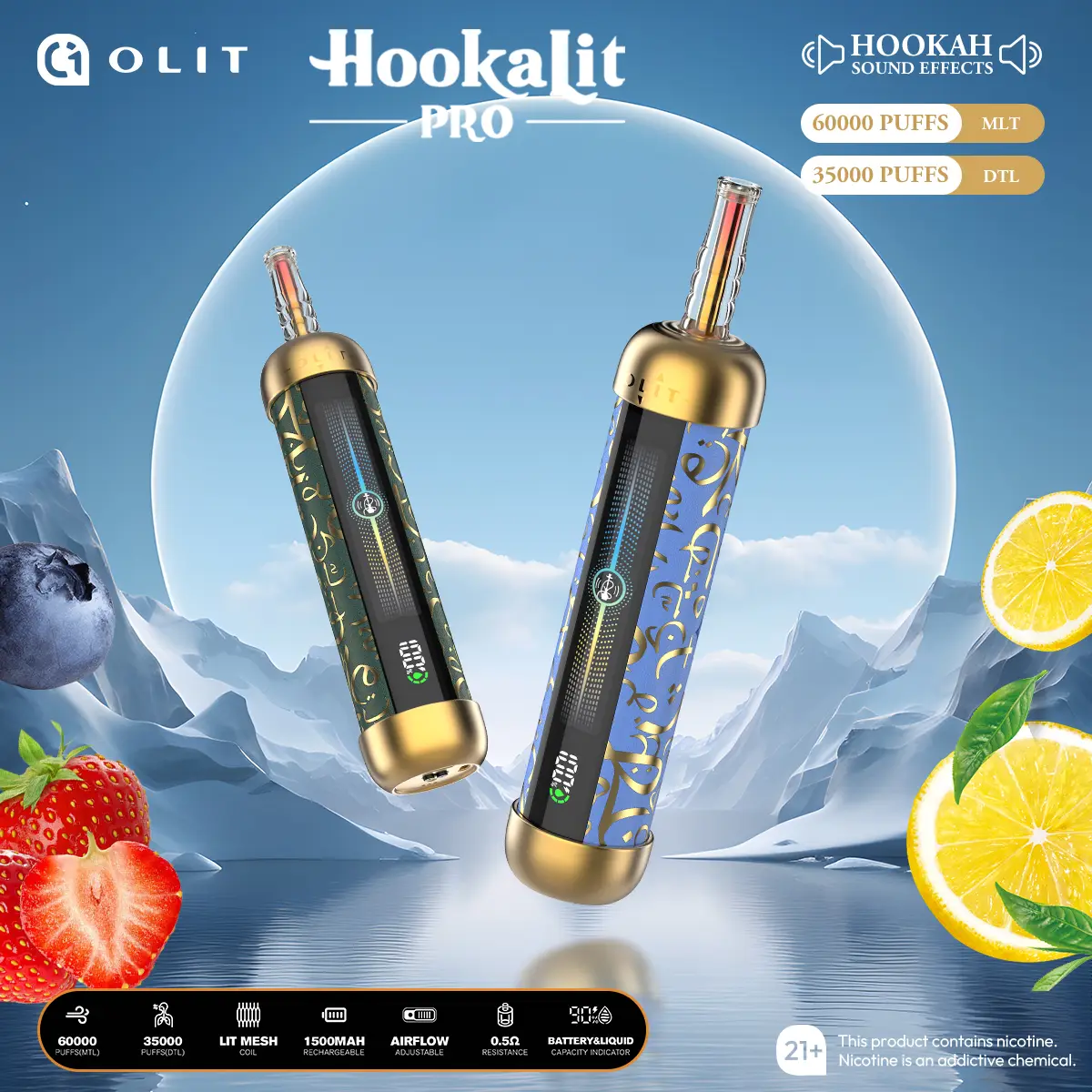
Olit Hookalit Pro 60K
60,000 puffs · 10 shisha-inspired flavors · No charcoal, no combustion
Olit Hookalit 40K — Tarot Edition
40,000 puffs · 20 flavors · Art-inspired design · MTL & DTL modes
The Water Filtration Myth
The most persistent misconception about hookah is that the water filters out harmful substances. Research consistently shows this is not the case.
Water cools the smoke, which makes it easier to inhale deeply and hold longer — actually increasing your exposure to toxins. The water traps a small fraction of particulate matter, but the majority of harmful compounds pass right through:
- Carbon monoxide: water-insoluble, passes through completely
- Heavy metals (lead, arsenic, chromium): minimal filtration
- Polycyclic aromatic hydrocarbons (PAHs): largely unaffected by water
- Nicotine: partially soluble but most still reaches your lungs
The cooler temperature is arguably worse — it removes the burning sensation that would otherwise warn you to stop inhaling. You end up breathing deeper and more frequently than you would with unfiltered smoke.
How Often You Smoke Matters: Session Frequency and Risk
One of the least-discussed aspects of hookah risk is the dose-response relationship. Not all hookah smokers carry the same risk profile, and frequency plays a major role.
Here is what the research suggests at different frequencies:
- Once or twice a month (social smoker): You will still experience short-term side effects like dizziness and elevated CO levels. Long-term cumulative damage is lower, but each session still delivers a substantial toxin dose. This is not "safe" — it is "less harmful."
- Once or twice a week: Studies show measurable declines in lung function at this frequency. Nicotine dependence becomes likely after several months. Your cardiovascular system faces repeated stress that does not fully recover between sessions.
- Daily or near-daily: At this level, health risks approach or match those of cigarette smoking. Cancer risk, chronic bronchitis symptoms, and cardiovascular disease become serious concerns.
The takeaway: every session carries risk, but reducing how often you smoke makes a real difference in your long-term outcomes.
Hookah Lounge Hygiene: Risks You Might Not Consider
Beyond the smoke itself, hookah lounges introduce hygiene-related health risks that home setups do not:
- Shared mouthpieces: Even with disposable tips, the hose interior and base are shared across customers throughout the night. Tuberculosis, influenza, COVID-19, hepatitis, and oral herpes can all transmit through shared smoking equipment.
- Cleaning standards vary wildly: Some lounges clean their bases and hoses between every customer. Others do not. There is no universal standard, and you rarely get to see the cleaning process.
- Poor ventilation: Secondhand hookah smoke contains the same toxic compounds you are inhaling. In enclosed lounges with multiple pipes running, ambient CO levels can reach concerning concentrations — even for staff who never smoke.
- Charcoal handling: Improperly lit or low-quality quick-light charcoals produce extra carbon monoxide and chemical residues compared to natural coconut coals.
If you do visit lounges, bring your own disposable mouthpiece, choose well-ventilated spaces, and pay attention to how the staff prepares and cleans equipment.
E-Hookah vs Traditional Hookah: A Cleaner Path
Electronic hookah devices eliminate the two biggest sources of harm in traditional hookah: combustion and charcoal.
Traditional hookah burns tobacco with charcoal, producing smoke full of tar, carbon monoxide, heavy metals, and carcinogens. E-hookah devices heat liquid instead — no burning, no charcoal, no combustion byproducts.
This matters because the majority of hookah's health damage comes from combustion. By removing fire from the equation, e-hookah devices like the Olit Hookalit Pro 60K eliminate tar, dramatically reduce carbon monoxide, and remove the hygiene risks of shared lounge equipment.
E-hookah still delivers nicotine (unless you choose a zero-nicotine option), so it is not completely risk-free. But for hookah enthusiasts who enjoy the flavors and ritual, it represents a significantly reduced-harm alternative to charcoal-and-tobacco sessions. The California Department of Public Health provides additional context on electronic smoking devices and their regulatory status.
Want to understand hookah vs vape to see how the tradition evolved into modern alternatives.
Ready for Hookah Flavor Without the Combustion?
The Olit Hookalit lineup delivers authentic shisha flavors — Two Apple, Gum Mint, Blueberry Mint, and more — without charcoal, tar, or shared mouthpieces.
For a detailed breakdown of what 0.35% nicotine actually means and how it compares to traditional hookah tobacco and cigarettes, see our nicotine content in hookah guide.
Browse All FlavorsFrequently Asked Questions
Yes. Hookah smoke reduces lung capacity over time. Regular smokers show decreased FEV1 scores — the same measurement doctors use to track conditions like COPD. A single session exposes your lungs to roughly 90,000 mL of smoke, compared to about 500 mL from one cigarette. That volume includes carcinogens, heavy metals, and particulate matter that deposit in lung tissue.
Hookah smoke dries out your mouth and disrupts the natural bacterial balance. This leads to higher rates of gum disease, tooth staining, and persistent bad breath. Sharing mouthpieces also raises the risk of transmitting oral infections like HSV-1 and H. pylori.
A single session delivers real short-term effects: elevated carbon monoxide levels, increased heart rate, dizziness, and potential nausea. While one session is unlikely to cause lasting damage, it is not harmless. Each session exposes you to the equivalent toxin load of multiple cigarettes in terms of carbon monoxide and tar.
Reduced inhaling lowers your lung exposure, but it does not eliminate risk. Smoke still contacts your mouth and throat (increasing oral cancer and gum disease risk). You also absorb nicotine through the oral mucosa. And in a hookah lounge, you are still breathing secondhand smoke from the ambient environment.
Herbal shisha removes nicotine and tobacco from the equation, but the charcoal still burns. That combustion produces carbon monoxide, tar, heavy metals, and carcinogens regardless of what is in the bowl. Herbal hookah is not nicotine-free and combustion-free — it is only nicotine-free.
Per session, hookah delivers more smoke volume (~90,000 mL vs ~500 mL), more carbon monoxide (~9×), and more tar (~36×) than a single cigarette. However, most hookah smokers use it less frequently than cigarette smokers. Total risk depends on how often you smoke. A daily hookah user faces risks comparable to a cigarette smoker.
Hookah Guides
Looking for more hookah knowledge? Browse our guides: